


NeuroBusiness Group & K.M.Trust & Partners Presents ...
The Pandemic Survival Guide
A Webinar Series to Help You Optimize Your Brain
 Srini Pillay, M.D.
CEO: NeuroBusiness Group
Harvard Psychiatrist
Read Bio
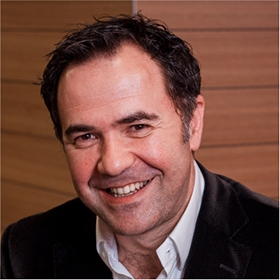 Radu Manolescu
Co-founder & Managing Partner K.M.Trust & Partners
Read Bio
 Mihai Popa-Radu
Founder, Mindfulness Institute
Read Bio
x
• CEO: NeuroBusiness Group (Top 20 mover and shaker in Leadership Development in the world: Training Industry)
• Former Assistant Professor of Psychiatry: Harvard Medical School
• Former Director: Outpatient Anxiety Disorders Program: McLean Hospital
• Former Director: Panic Disorders: Brain Imaging Center
• LinkedIn Learning: Anxiety/ Depression/ Neuroscience
• Think Tank on Adult Learning & Development: McKinsey &Co. (CAALD)
• US Psychiatry Think Tank: Disasters and the World (GAP)
• Biotechnology
• Active clinician/executive coach/leadership development
x
Radu is the Managing Partner of K.M.Trust & Partners which he co-founded in 2006 and who became, starting year two, one of the leading executive search and leadership development firms on the Romanian market. K.M.Trust’s mission is to help companies live their values while having a memorable positive impact in the lives of the people we work with.
Few years ago he initiated an education focused NGO – AVE (www.ave-romania.ro )together with some wonderful people. The common objective is to involve the business community in order to contribute more to, and work together with schools and authorities in order to realize the ambition of having the Romanian education system recognized as among the top 10 in Europe by 2035. Today AVE works closely with the most relevant NGOs from education who assumed the same mission and goals for a faster impact and scalability.
He also believes that all of us should contribute towards the introduction of SEL (Social Emotional Learning) in schools hoping that in 20-30 years to have kinder, more compassionate and more responsible adults be it executives, doctors, professors or workers.
Radu has a University Degree from ASE Bucharest, International Economical Relations Faculty. He has postgraduate studies in marketing /Athens and attended Executive Programs at INSEAD, Harvard Business School, Singularity University and Ecole Hoteliere de Lausanne where he was also Visiting Lecturer.
x
Mihai Popa-Radu is a leadership development expert and coach, awarded twice the title of Romanian Executive Coach of the Year.
Mihai has been practicing mindfulness-based techniques since 2008. He has trained with various meditation teachers including the Dalai Lama, Stephen Batchelor (UK), Bill Karelis (USA), Jeff Shore (Japan), ven Gonsar Rinpoche (Tibet – Switzerland), ven Tan Dhammavidu (Thailand). He deepened his meditation practice going to retreats in Austria, Hungary, Germany, India, Italy, Japan, Romania and Thailand.
In 2009 Mihai created the Seeds for Happiness centre for the development of human potential (www.seedsforhappiness.ro), which is the first organization in Romania to consistently promote the study and practice of mindfulness. Since 2012 he has been offering meditation sessions and programs including Mindfulness for Busy People, the 1-week Happy Mind Retreat in Tuscany – Italy, and was the co-organizer and keynote speaker at the first mindfulness conference hosted in Romania in 2015.
In 2014 he created the Mindfulness Institute (www.mindin.ro) , which aims to promote the benefits of mindfulness in organizations.
He is the translator in the Romanian language of two books by Alan Watts, Devin-o ceea ce esti (“Become what You Are”) si Intelepciunea Nesigurantei (“The Wisdom of Insecurity”), published at Herald publishing house.
Also In partnership with Editura Herald, Mihai sponsored and/or promoted through the Mindfulness Institute the publication of Romanian translations of a series of important titles in mindfulness, including Mindfulness in plain English by Bhante Gunaratana, Wherever You go there You Are by J Kabat Zinn, Zen Mind, Beginner’s Mind by S. Suzuki and Thoughts without a Thinker by Mark Epstein.
Lately, Mihai was instrumental in the publishing in Romanian language at editura Vellant of two important titles: Organizatia Reinventata (“Reinventing Organizations”) by Frederic Laloux and Mindful Business (“Mindful Work”) by David Gelles (best-seller New York Times)
Join Dr. Srini Pillay, Radu Manolescu and Mihai Popa-Radu as they present key neuroscience methods & leadership models in this webinar series:
| April 22: #1 |
Managing Cabin Fever and Social DistancingDr. Srini Pillay will explain the implications of cabin fever and social distancing in the brain, and how leaders will manage this now, and as the workforce integrates. Outcome: Relationship strategies to optimize team cohesion at a time when people are not physically together, and how to manage this when they come together again. And leaders will use this to connect this to strategic goals too |
Srini Pillay, M.D. |
From Scary Isolation to Enjoyable AlonenessMihai Popa-Radu will show how, by reframing the way in which we perceive the events, we can better cope (and even enjoy) this temporary isolation and start discovering the significant difference between “aloneness” (feeling comfortable when living by and with oneself) and “loneliness” (feeling lonely, separated and disconnected from the world). Outcome: Participants will experiment with various practices that increase the sense of connection with oneself and others, help dealing with loneliness and helplessness, and discover beauty and magic even in the most mundane activities. |
Mihai Popa-Radu |
| April 29: #2 |
Leading the Brains of Virtual Teams and Being Part of OneDr. Srini Pillay will describe the latest research on how virtual teams work best. He will also describe the effects of teaming in the brain, and how leaders will manage this now, and as the workforce integrates. Outcome: Virtual team strategies to optimize team cohesion and execution of strategy so that leaders can increase operational efficiency. |
Srini Pillay, M.D. |
How Do We Know If Our Leadership Model Is the Right One During These Times?Radu Manolescu will discuss about self-reflection on our own leadership model and communication, Self-reflection on our energy and on our social awareness and about altruistic leadership. Outcome: Participants will have their leadership benchmark challenged and thus might have an improved one after the webinar. |
Radu Manolescu |
| May 6: #3 |
The Resilient BrainDr. Srini Pillay will provide an overview of specific psychological stressors in pandemics, the pandemic brain, and how to build resilience in the pandemic brain. Leaders will then use this information to construct an organizational resilience mindset strategy and will consider how they will scale this throughout their organizations. Outcome: Evaluate where you are on pandemic fears, brain-based resilience, and learn the contents of a new mental playbook for your organization during pandemics. This playbook will be there whenever you need to respond to similar emergencies. And leaders will use this to connect this to strategic goals too. |
Srini Pillay, M.D. |
The Resilient BeingMihai Popa-Radu will explain that if we ground ourselves on all three levels (brain, body and heart), we are better equipped to face the challenges of life from an inner space of calm and we can respond wisely to events instead of instinctively react. In this webinar we will explore how we can manage our mental and emotional states by training our attention and by using our breathing as a “switch” between the sympathetic and parasympathetic nervous systems. Outcome: Participants will experiment with various grounding practices that will increase their ability to stay calm and centered in challenging situations; Participants will also familiarize themselves with simple practices that will strengthen the “attention muscle”, become able to focus attention on productive/actionable thoughts and regain their mental and emotional balance when dealing with undesired events. |
Mihai Popa-Radu |
| May 13: #4 |
Building Body ArmorA sound mind requires a sound body. Dr. Srini Pillay will provide various perspectives from mind-body medicine on how and why to protect your body during this stressful period. Outcome: Leaders will commit to and devise a psychological and physical plan to protect their bodies during this stressful period. And leaders will use this to connect this to strategic goals and time management too. |
Srini Pillay, M.D. |
Mind Body Self. Impact in LeadershipRadu Manolescu will talk about Mind Body Self and its impact in leadership. how taking care of ourselves can be actually highly altruistic. A Health Tool Self Assessment® will be sent to participants in advance for each to assess where he/she is and how much of and how much of an example one is for the people around? Outcome: Leaders will have an increased self awareness and a simple tool to assess their and their people mind body self balance. |
Radu Manolescu |
| May 20: #5 |
From Surviving to ThrivingHere, Dr. Srini Pillay will review the brain-basis of antifragility, and how leaders can change their mindsets to become antifragile during this period. Outcome: Leaders will have the time to connect the antifragile mindset principles to their strategic goals. |
Srini Pillay, M.D. |
A Story on How Failure and Fear Became Some of the Best Things That Happened to MeRadu will talk about real life examples of others and of himself who were apparently a dead end yet they have become major professional and personal life opportunities. Outcome: Participants will learn about what it takes to transform each failure into an opportunity. |
Radu Manolescu |
| May 27: #6 |
A Day in the life of a Pandemic ThriverDr. Srini Pillay & Radu Manolescu will facilitate a session in which leaders discuss how their strategies, time management, mindsets, and way of being are being cemented and changed as a result of these interventions Outcome: Anchor 6-8 weeks of learning and set up for review monthly following this. |
Srini Pillay M.D. & Radu Manolescu Facilitators |
*** All webinar times 5pm Bucharest, 4pm CET, 10am EST via live broadcast. Each webinar will be recorded.
Each webinar consists of:
- 60 minutes of research-based content, practically applied to the workplace.
- 30 minutes of Q&A to address concerns & learn real-world solutions
Location: Via Zoom
Webinar pricing:
Webinar package (all six): 408 EUR
Individual webinar (up to five): 73 EUR
Or instead, click here to buy individual webinars
Speaking AC
Simply fill out the form below:
This will close in 0 seconds
NBG-ASIA Inquiry Form
Simply fill out the form below:
This will close in 0 seconds
The Science of Possibility
Science of Possibility.
"Just Do It," simply won't work post pandemic with stress levels at epidemic proportions. Today, delivering an organizational goal requires new method with proven psychological heft and departure from the status quo. Stress and mental roadblocks undermine initiatives because they're typically fiercer and more persistent than tangible ones. Leaders and teams can have vastly different beliefs about what's possible to achieve.
How then, do leaders inspire teams to...
Exceed sales quoras?
Create a "never been done before," product
Implement a strategic initiative ... in spite of elevated stress, varying beliefs and mental roadblocks?
Imagine if ... there was a way to boost a sense of what's possible, and a way to transform mental roadblocks to achieve any goal ... no matter what. The shift in focus, time and energy goes from obstacles to the objective. Imagine if... there was a neuroscience toolkit that leaders and teams could apply to increase a goal's viability and success?
There is. It's called Possibility Thinking, because research validates, for every initiative, mindset matters. Possibility thinking primes the mindset ahead of a goal using easy to learn and apply brain-based techniques. The Science of Possibility session, guides leaders to discover their sense of what's possible, and what's blocking it. There are several, but a significant factor that obstructs possibility thinking is prolonged stress, there's no optimum performance in this state and it has serious physical health consequences.
This session gives leaders the practical tools to transform stress and underlying mental blockages. The return exceeds the investment with a measurable improvement in possibility that nets tangible results. Instead of just envisioning an immediate goal or the distant future .... leaders now have the neuroscience understanding, skills and the tools ... to build it.
This will close in 0 seconds
Building Leadership Resilience
Building leadership resilience.
"Grin and bear it," isn't an effective or sustainable resilience building strategy. Yet leaders face new challenges, sometimes with outmoded tools.
This Building Resilience program turns the topic upside down.
It changes the conversation.
To transform daunting challenges and build resilience that sticks, understanding the foundational complexities of the brain is a must. Otherwise it's a contest between evolutionary factors that thwart every attempt at building resilience.
"Bad is stronger than good," is one such factor. This famous piece of research, tells us, that our evolutionary hardwiring is to focus more attention on bad things which are easily retrievable in our memory.
But when we're wired to focus on bad things, is building resilience even possible? Yes, it is.
You don't need to be held hostage to evolution. The truth is, the brain can change, when you know how. In Building Resilience, this program introduces daring new approaches outside of the ordinary paradigms. It focuses on the neuroscience of resilience.
With supporting research and brain-based techniques, each participant learns the steps necessary to change the brain. It outlines the neurological conditions that promote clear thinking, a sense of calm amidst the storm, mindset necessary in astute decision making and a critical component of resilience. Leaders gain new perspectives on the brain and specific ways to leverage its power to apply to challenges within the organization for visible outcomes.
This neuroscience approach to resilience puts the practical tools into the hands of each leader. It gives them concrete new methods to face new challenges in the post pandemic era, during times of uncertainty and transition. No leader or team member should ever have to, "Grin and bear it," ... when they can possess the resilience to thrive.
This will close in 0 seconds
About Srini
The next best thing to his snazzy shoes… are the credentials that fill them… Srini Pillay M.D.

- Harvard-trained psychiatrist
- Brain researcher
- Certified master executive coach
- LinkedIn Learning Instructor
- Faculty: Harvard Business School Executive Education & Duke Corporate Education
- Training Industry: Top 20 mover & shaker in leadership development in the world
- Think tank member: McKinsey & Co.
- Board: FRED Leadership (Ethical Leadership)
- Member: Transformational Leadership Council
- Former Director Outpatient Anxiety Disorders Program: Mclean Hospital
- Co-Founder & Chief Medical Officer: Reulay
This will close in 0 seconds